By Coach Adam
28:Tenn Fitness | Hendersonville, Tennessee
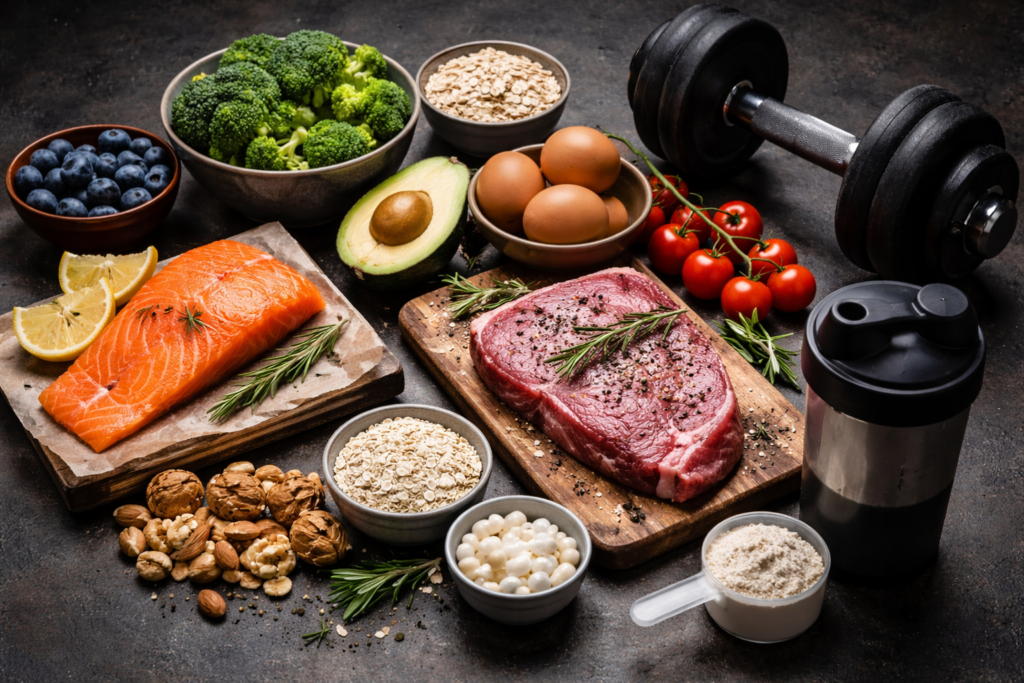
Supplements.
It’s a small thing you can do for your health.
But it’s a small thing you can do for your health.
Those two sentences look identical.
They’re not.
One makes supplements feel powerful.
The other puts them in their proper place.
Before we talk about protein powder, creatine, fish oil, greens powders, or amino acids, we need to talk about the house.
Because too often, people are mowing their lawns while their houses are on fire.
And I say that with respect—not sarcasm. I’ve seen it. I’ve done it. It’s easy to chase the small thing when the big thing feels harder.
The house isn’t complicated.
It’s just not glamorous.
It looks like:
That’s the structure.
A multivitamin doesn’t fix a protein deficiency.
Fish oil doesn’t fix chronic sleep deprivation.
Magnesium doesn’t fix scrolling your phone at midnight.
Fat burners don’t fix the absence of strength training.
(If you’re unsure how much exercise actually matters, I break that down in How Much Should I Exercise? ACSM Guidelines Explained for Real Life.)
If you’d like a deeper dive into how we define supportive nutrition at 28:Tenn Fitness, I explain that in Mastering Mealtime: A Guide to Eating the Right Foods in the Right Amounts at the Right Time.
If the house isn’t built, supplements are landscaping.
And landscaping matters—after the structure stands.
It’s easy to obsess over:
While:
That’s not optimization.
That’s distraction.
Supplements are easy.
The fundamentals require discipline.
And I don’t say that to shame anyone. I say it because I’d rather see you spend your money and energy where it actually moves the needle.
Supplements are a small thing you can do for your health.
In other words: Supplements aren’t useless. They’re just not the main character.
They’re support.
And small things matter.
If your habits aren’t strong yet, a multivitamin might be your springboard.
If you’re traveling or in a busy season, a protein shake or greens powder can help.
If you’re training hard in a calorie deficit, amino acids may support muscle retention.
Supplements aren’t the finish line.
But they can be a starting line.
If the house is being built—or already stands—here are the additions I support.
Not because they’re trendy.
Because they’re practical.
Think of it as insurance.
According to NHANES data (as cited by Dr. Ryan Andrews), common deficiencies in the U.S. include:
Those numbers matter.
But so does this:
Most of those nutrients are found in real food.
Vitamin B6: chickpeas, turkey, tuna, salmon, chicken, potatoes, bananas
Iron: beef, pork, turkey, fish, spinach, tofu, lentils, beans
Vitamin D: fatty fish, egg yolks, fortified dairy
Vitamin C: citrus fruits, bell peppers, strawberries, broccoli
Vitamin B12: salmon, tuna, clams, beef, dairy, eggs
Notice something?
There’s overlap.
Salmon shows up more than once.
Tuna shows up more than once.
Animal proteins show up repeatedly.
If you’re consistently eating lean proteins and colorful produce, you’re already checking multiple boxes at once.
That’s efficiency.
A multivitamin may help cover gaps.
But the first solution isn’t the pill.
It’s the plate.
If bloodwork confirms a deficiency, targeted supplementation makes sense. Speak with your physician before making those decisions.
Low cost. Low risk. Not magic.
A starting point—not the solution.
Before powders, identify what protein is.
Chicken. Eggs. Greek yogurt. Lean beef. Fish. Tofu.
Eat it daily.
Most active adults benefit from roughly 0.7–1 gram per pound of bodyweight per day to support strength, recovery, and muscle retention.
If you struggle to hit that, protein powder is a useful tool.
It supports:
Convenient. Effective. Supplemental.
Not superior to whole food.
Just helpful when life gets busy.
If total daily protein is adequate, they’re less necessary.
But when:
They can help preserve muscle and support recovery without meaningfully increasing calorie intake.
Context matters.
Whole vegetables first.
Always.
Travel happens.
Busy seasons happen.
Life happens.
Greens powders can be a “better than nothing” option.
They supplement vegetables.
They don’t replace them.
If you don’t eat fatty fish regularly, supplementation may support:
Vegetarian or vegan? Algae oil works.
Simple.
One of the most researched supplements available.
Supports:
This isn’t just for bodybuilders.
It’s for anyone who wants to stay capable.
If the goal is to do more of what you love—longer—creatine supports that mission.
For performance or muscle-gain phases:
This combination also provides additional calories, which are often necessary to support performance, recovery, and muscle growth.
You don’t build muscle from willpower alone. You build it with stimulus and fuel.
Better recovery → harder training → stronger adaptation.
A tool.
Not a requirement.
Supplements won’t save you.
They won’t outwork sleep deprivation.
They won’t outwork processed food.
They won’t outwork stress.
They won’t outwork inactivity.
But they can support you.
Build the house.
Then mow the lawn.
Be strong, and do the work!
© 2026 28:Tenn Fitness ALL RIGHTS RESERVED
Website Proudly Designed by CGC